

04. The Interview: Jamie Little
FOX Sports Broadcaster: NASCAR, IndyCar

For more than twenty years, Jamie Little has been a fixture on pit road at the biggest events in auto racing, and her name has become synonymous with motorsports broadcasting. From her humble beginnings in Lake Tahoe, Utah, Jamie was raised by a single mother who instilled in her a level of determination that carried her to the highest ranks of network television as a reporter. From becoming the first female lead play-by-play announcer in NASCAR at the network level to calling pit stops at the Indy 500 and Daytona 500, Jamie has told the stories from pit lane with authority, grace, and humility.
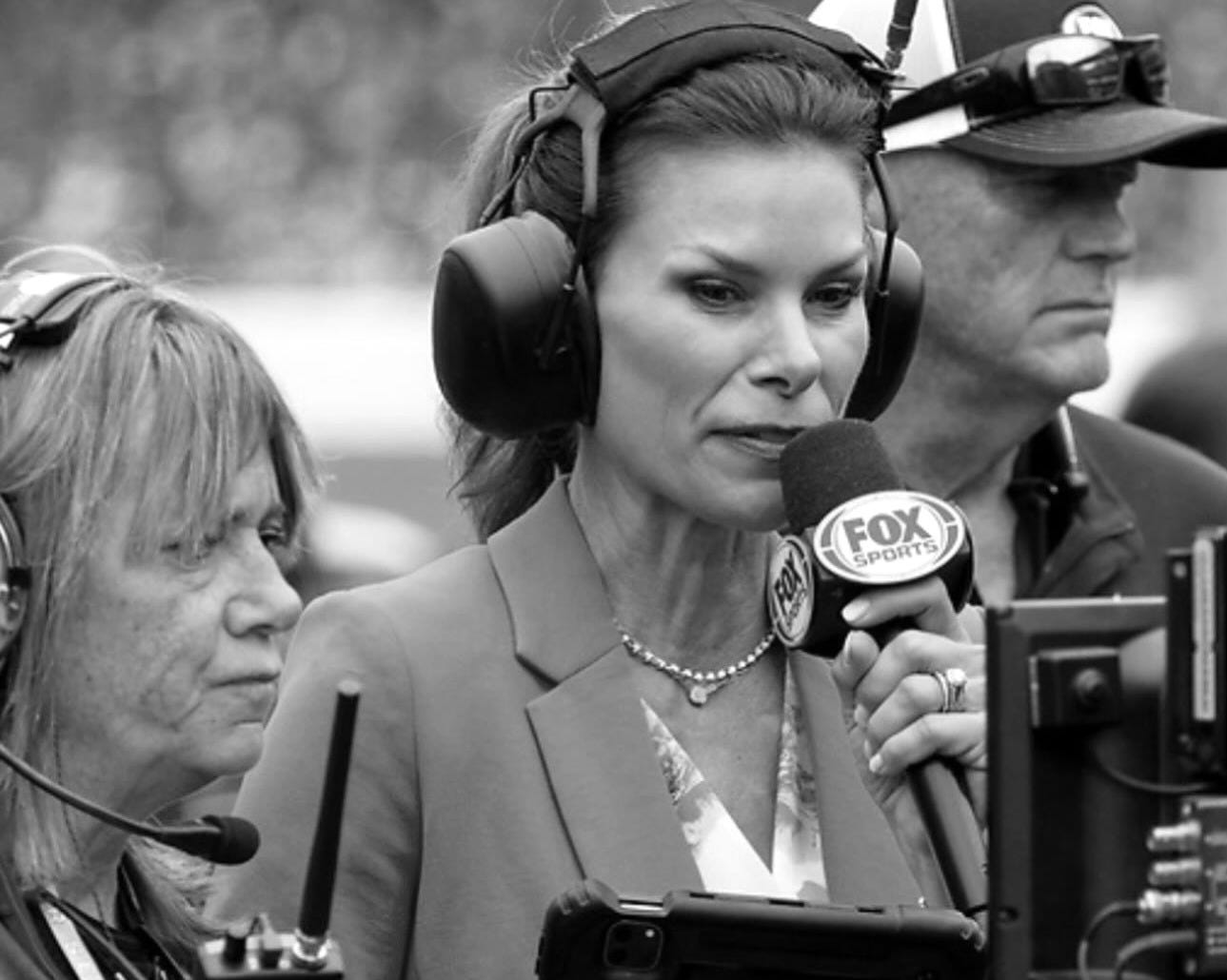
KAITLYN VINCIE: I want to start at the very beginning. What is your earliest memory of racing, what drew you to the sport as a young person?
JAMIE LITTLE: It goes back so far—it’s funny, really. My first dealings with racing, or anything motorized, were actually with my real father when I was just four years old. We were living in Lake Tahoe, and he had a dirt bike. He would come home and work on his Harley and dirt bike during the day. I remember the first time he took me on it. I still remember the smell, the sound, and the feeling I had riding on a dirt track. There was just something about it that resonated with me, and I never forgot it. Living in Lake Tahoe, I was a tomboy, and I always gravitated toward motorized things. I would always befriend the kid who had a quad or a minibike. I think I just loved that feeling of freedom—being on one. Then, when my mom and I moved to Las Vegas, I was 13 years old when I met Carey Hart, who’s married to Pink. He raced locally and competed in AMA Supercross Championship, and I remember thinking he was just the coolest guy I had ever met. I really wanted to get involved with Supercross and learn about it, so I went to my first race when I was just 15 years old. I remember sneaking under the fence in Las Vegas at Sam Boyd Stadium. I saw Jeremy McGrath, and I thought he was awesome, so I rooted for him. It turns out he won his first championship at that race. Long story short, I was hooked. I started reading Dirt Rider magazines. I would take them to school and sit in the back of class looking at them. I just knew there was something there.
KV: That’s very interesting, I was always curious how the journalism side started. What was your very first job in television and journalism?
I had continued following the sport, and I was trying to figure out exactly what I wanted to do. I really felt like I could do television, and I wanted to interview the riders and appeal to the female fan base because I thought, if I’m a fan, there have to be a lot of other women who are fans out there. However, there weren’t really any women on television doing the job in a way that represented me. So I thought, “Why not? I’ll be that person.” So, I went up to a guy who had an ESPN microphone at a race when I was just 18 years old, and I said, “This is what I want to do—how do I get involved?” He was a freelance reporter in San Diego and Southern California doing work for MotoWorld on ESPN, so he told me I could tag along with him and go to races. We would go cover dirt races, and I learned how to write and do stand-ups and practiced on camera. The one job that really kind of put me on the map was live announcing at AMA Supercross Championship races. I started doing that when I was 21 years old while still attending San Diego State University. But during that time was when I started getting noticed by ESPN. In 2002, I did the X Games, so that was kind of the beginning of television for me.
KV: I love that origin story, I bet a lot of people don’t know all of that.
We all have those stories you know? Just about paying your dues. It wasn’t about the money. It was about getting to where you wanted to be.
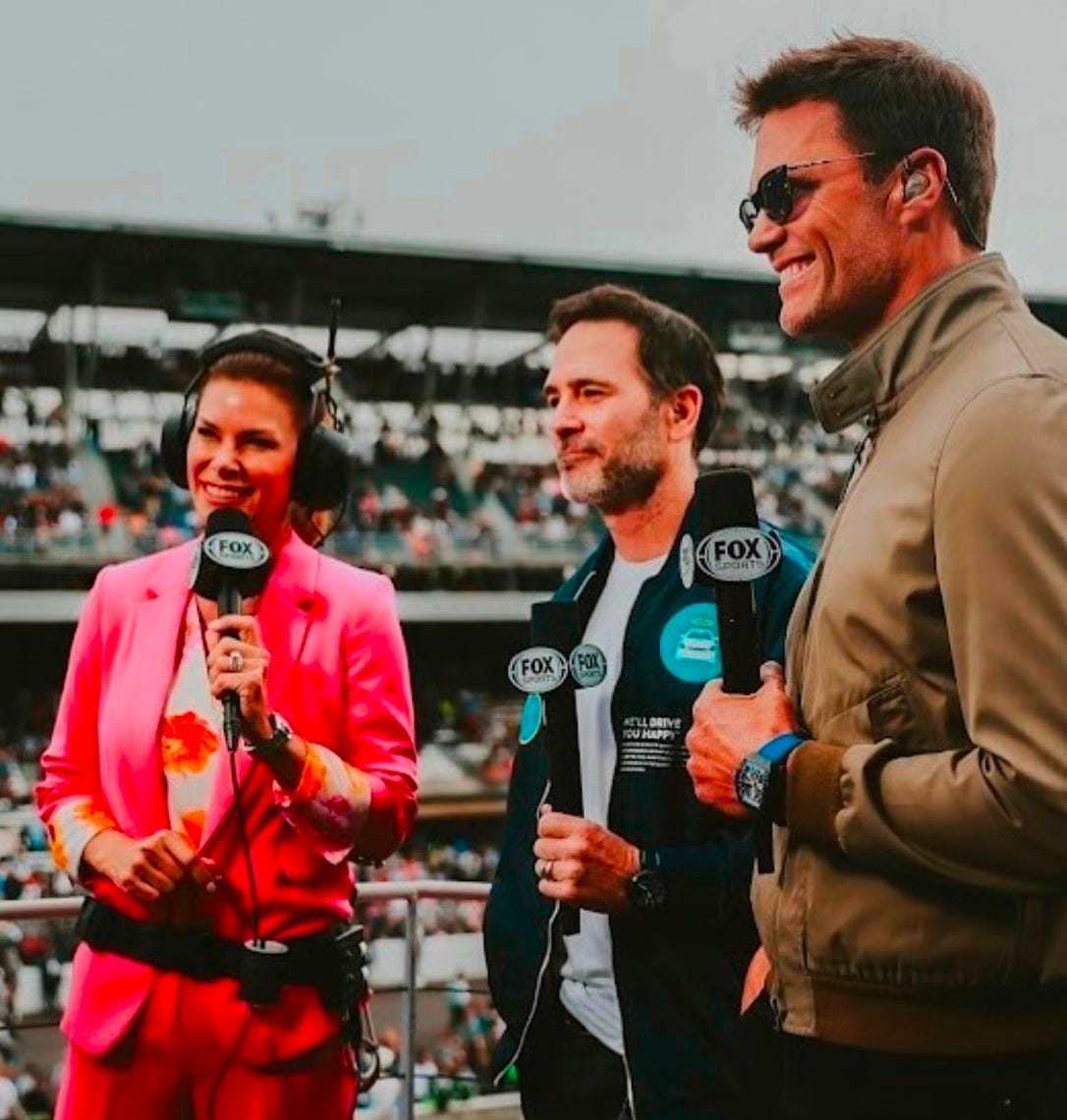
KV: Well, you certainly have done that. Which brings me to my next question. ESPN. You covered IndyCar and NASCAR while you were there. What stands out to you from that time in your career?
In 2002, I really wanted to be a part of ESPN, so I tracked down the name of the boss who made all those decisions for talent. He knew who I was; he had seen my work. He said he was going to give me a chance—but there would be no contract, and they would see how I did. That boss ended up being my boss until 2014, when our ESPN contract expired with NASCAR. It was incredible how all that worked out. We both credit each other with finding one another. If it weren’t for him giving me a shot, I wouldn’t be here today. One day my boss called me into his office, and I feared I was in trouble or something, but he asked, “What do you know about IndyCar Series and four-wheel racing?” I told him I didn’t know much, but it’s racing, and I could figure it out. Literally six weeks later, I was at Homestead-Miami Speedway calling my first pit stop. Then the month of May came, and we were in Indiana for a whole month. We had so many practices and qualifying sessions—everything that comes with it. I even remember interviewing A. J. Foyt, and it went really well. Then I got another call that they wanted to add me to pit road for the Indy 500. It was guys like Doc Punch, Gary Gerould, Jack Arute—guys who had been there forever. And I was joining them. The night before the race, we took photos in our fire suits. There was me, and then all the men. Here I was, 25 years old, standing in the middle, happy as could be. There was no turning back now from that kind of pressure. That race ended up being an eight-and-a-half hour broadcast. We stayed live the whole time through rain and tornado warnings. I remember thinking, if I can survive this, I can do anything. The pressure I felt in that moment made it a pivotal point in my career. To be the first woman ever on pit road for the 500 solidified where I was, what I wanted, and how I got there. And I never looked back.


KV: I remember seeing that photo recently when you posted it last May and it speaks volumes.
I didn’t know what I didn’t know. I think being raised by a single mom just built me differently, where I didn’t see gender and my mom always taught me to say ‘yes,’ and figure it out later. That’s exactly how I approach life. I never looked at it and questioned if I fit in with the men, I looked at it like I’m covering something I’ve never done before.
KV: Funny, I had a question written down about your mom and your upbringing. I see your mom regularly pop up in photos, she seems like an amazing woman. What were the values that your mom instilled in you as a young girl in terms of the value of hard work?
She led by example. We didn’t have someone there to take care of us. We lived in a one-thousand square foot house in Tahoe, and we wouldn’t even turn the heater on if we could stand it, because my mom didn’t have much money. I would have to chop the wood, start the fires, shovel the driveway when it snowed. It was just survival. That’s how I grew up and it was an amazing upbringing. I wouldn’t want it any other way. I would walk two miles to get to the stables that I worked at, with coyotes running around. But I wasn’t scared, because that was how my mom taught me to be. If you want to get something done, you have to do it yourself.
KV: What is her reaction to what you’ve done with your career?
She’s so proud. She still sends me those texts and tells me I look great on-air. Or she says she loves the interviews with MJ [Michael Jordan]. She is very much a part of it and watches every weekend. She can’t believe it, just how long I’ve been here and still doing this career.
KV: I bet she is. So, you have been at FOX since 2015. Now you have added so many new layers to an already highly decorated resume. Play-by-play being one of them, the first woman as the lead announcer for a national motorsports series. Why is that achievement special to you?
I think it’s important because it was the next step in my career. I’ve been a pit reporter for so long—my whole career. And I had never thought that being in the booth was something I could do, because I had never seen a woman do it on our level of racing on a national stage. So it never crossed my mind. I think that’s what means more to me, because I’m doing something that I hadn’t seen before, and it’s a new skill set. It would have been very easy for me not to step out of my comfort zone and take on something like play-by-play. I was making myself vulnerable, and I wasn’t used to getting criticized or hated on for my job. I never really experienced that as a pit reporter. I think the fact that I took on something new that I didn’t have to do for my future is what makes me proud.
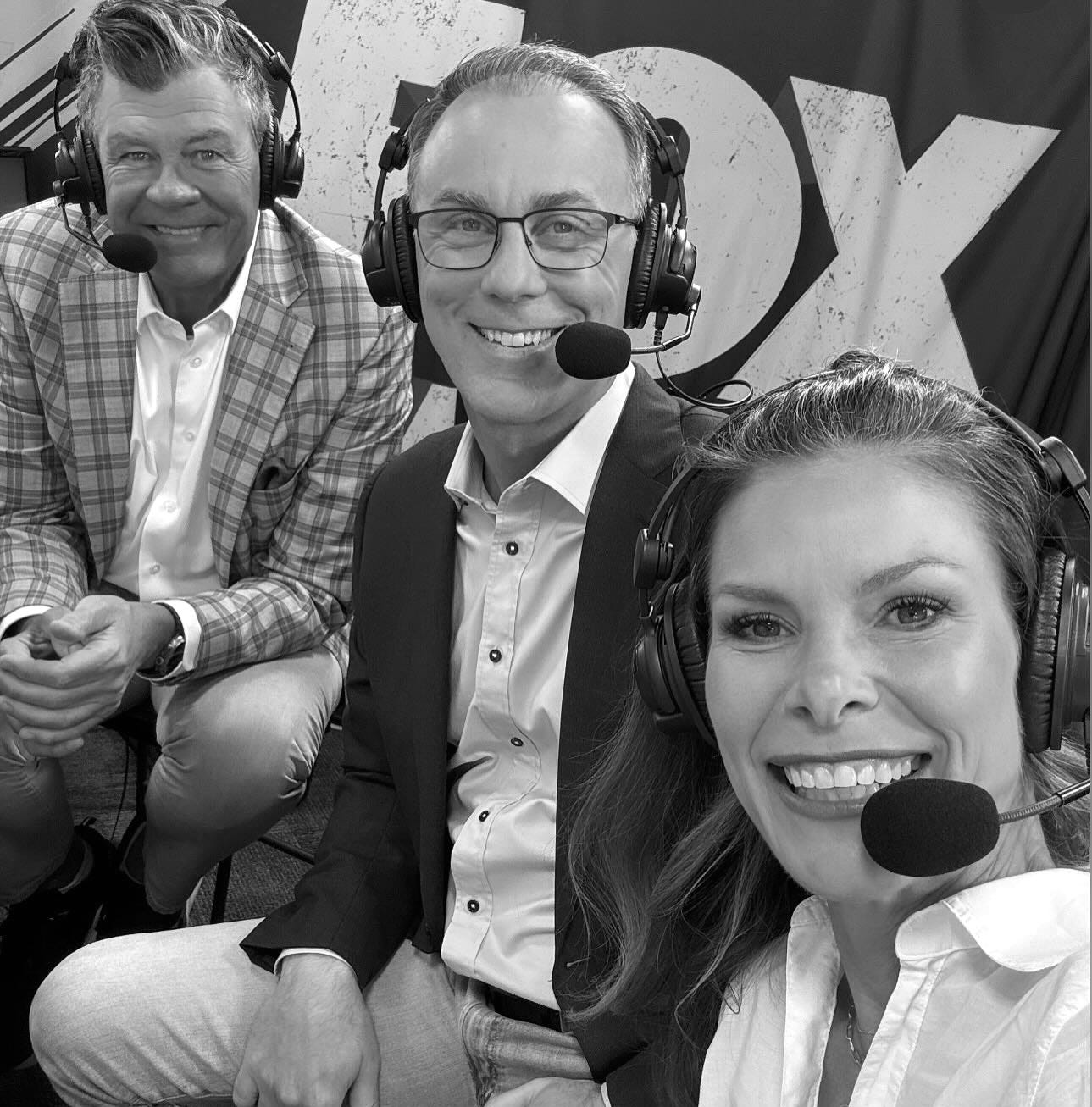
KV: You should be proud. You mention pit reporting. You’re one of the absolute best, hands down on pit road. I just feel Jamie Little is synonymous with motorsports pit reporting. Calling stops, is an art. Crafting those reports to be informative and provide a story telling element in a few seconds is hard. How do you do it?
The hardest part of what we do is what I call “trimming the fat.” We’re inundated with information, and the real challenge is whittling it down to fifteen seconds—if that. You have to tie in something that happened earlier, what the driver is feeling now, and what they’re planning to do on the stop. Pit reports are especially tough because you also have to listen to the broadcast booth, follow what they’re saying, and quickly add to it. It’s not easy to cut everything down, be concise, and still tell those stories. That’s something that has taken me years to perfect.
KV: You’ve already had a banner year in terms of coverage at FOX, that includes some pretty moving interviews with Michael Jordan, Tyler Reddick. Obviously that team has dominated the conversation this season. What have those moments been like for you so far this year?
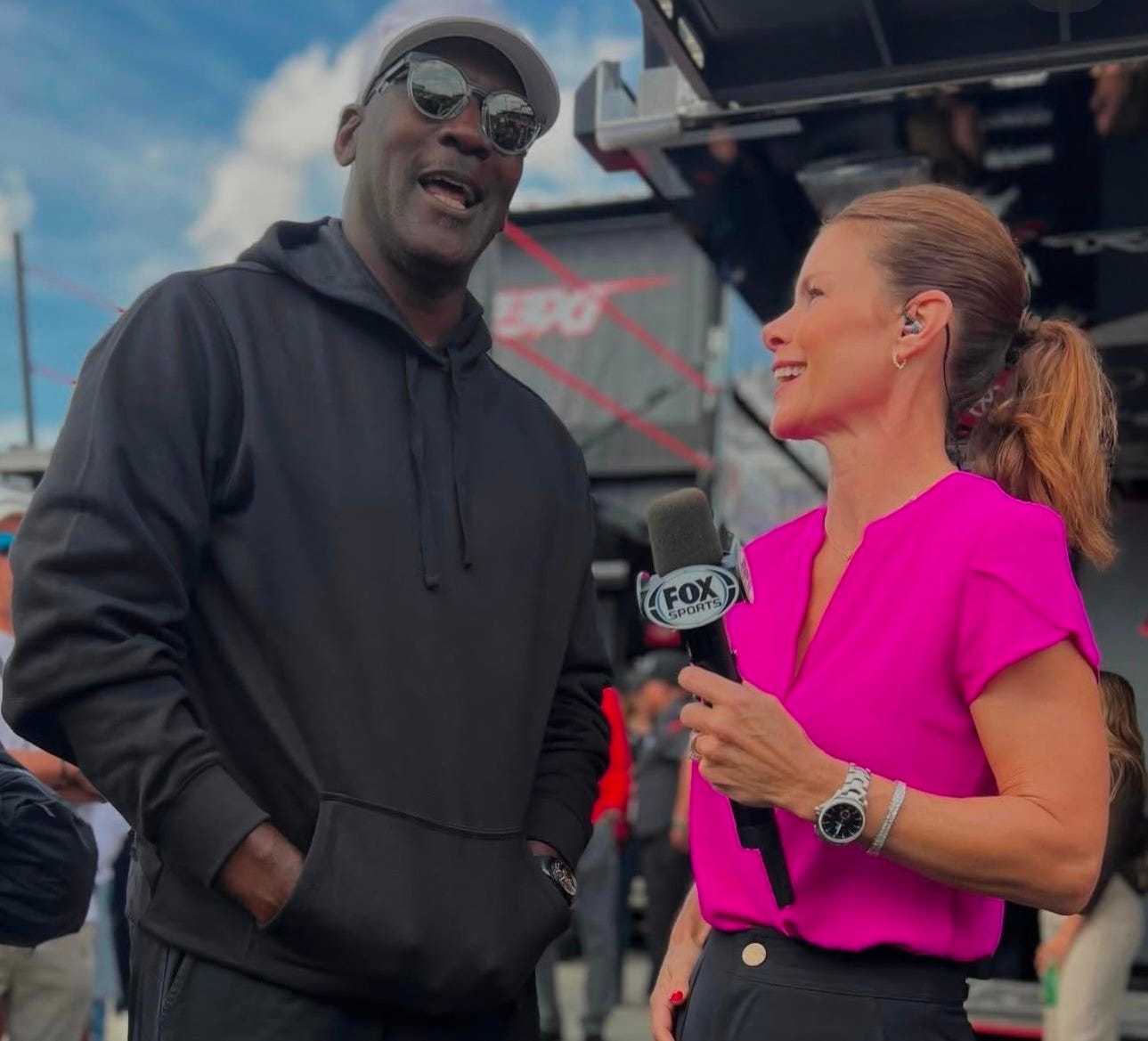
It’s a dream. As a reporter, it’s always more fun to cover winners. It’s hard to cover losses and the stories of heartbreak, even though that’s an important part of our job. Getting to cover people when they’re winning and tell those stories — especially when it extends beyond racing, like it does with Michael Jordan — is incredible. The fact that we’ve been given access to interview him after each of these wins and help tell that story is a dream. It’s so much fun to be the person who showcases that excitement, joy, and passion — and helps convey it to the fans.
KV: You have interviewed everyone from MJ to the President of the United States. Is there an interview from your career that will stay with you forever?
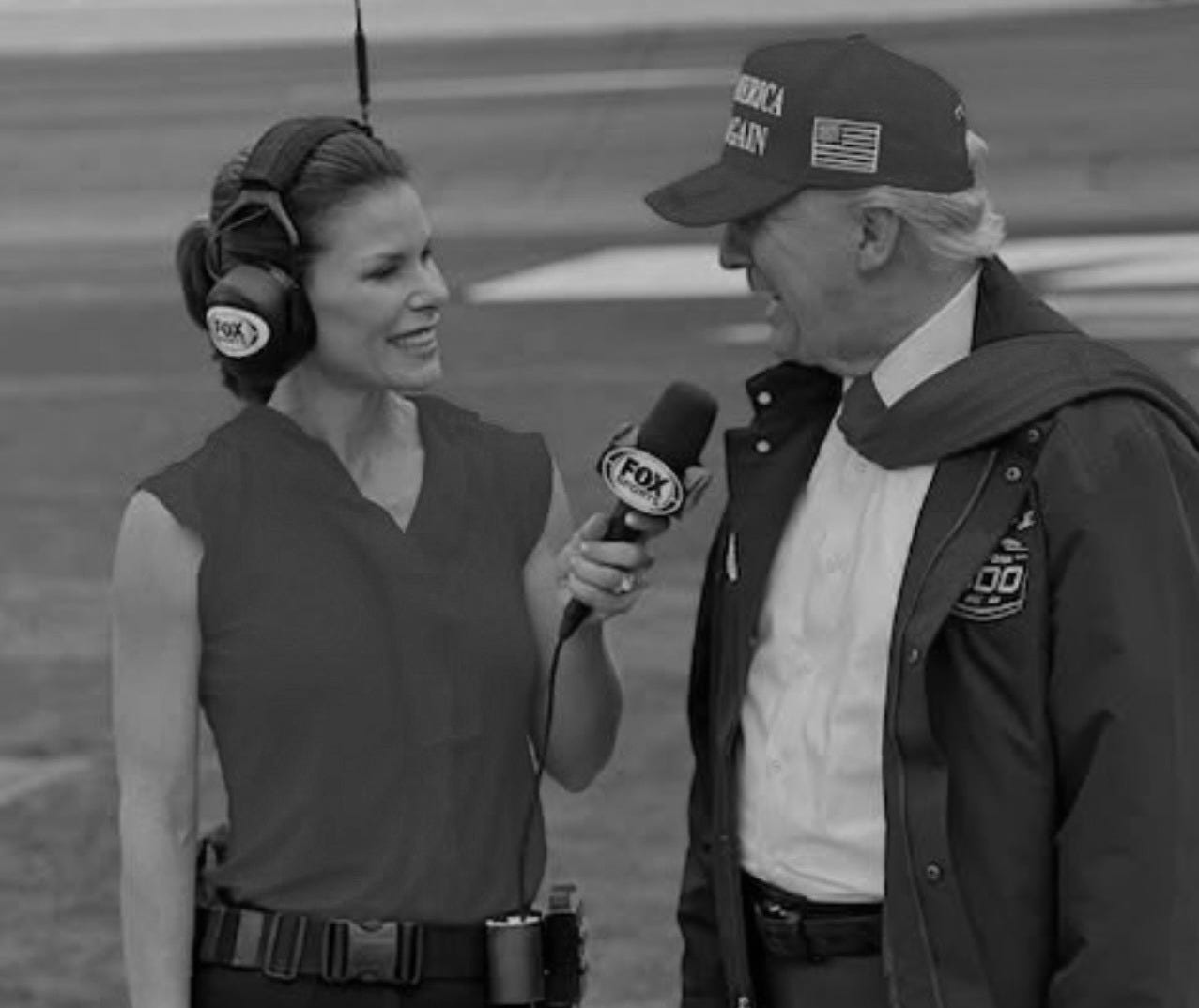
I would say interviewing Donald Trump the first time. I had never interviewed someone that high-ranking who was so visible. That was a big moment for me—that they had requested me. FOX came to me and asked if I was okay with it, and I was. The process was amazing. My phone rang, and it literally said “White House.” They wanted to know what I would be asking him and let me know they had run a background check on me. They already knew everything about me. When I got to Daytona, I had to sit through a meeting with Secret Service the night before. There was a lot of added pressure in that moment, standing out there in the infield at Daytona when he drove up. I thought to myself, I better stick this, or it will either be the biggest moment for me or the worst moment for me. I don’t care where you stand politically—to interview the President of the United States at that moment, standing next to him and sharing a microphone, was a huge moment in my career.
KV: So few people would ever have that opportunity in life. To shift gears, you are a full-time working mom in the sport. I’ve kind of realized that there aren’t many of us who are consistently at the track and traveling. It’s a smaller group. To be honest, I think a lot of women might fear that they wouldn’t be able to have a family if they are on the road working. How have you managed that part of your life?
I think that is a real thing. I’ve had other women from other sports who are broadcasters call me and ask. I remember Erin Andrews called me some years ago. She just wanted to talk to me about it because we had worked together in the past. She asked, “How do you balance it all? Is it possible to have it all?” And it truly is, but it’s very hard. You cannot be 100 percent at either job when they’re happening at the same time, and that’s just a reality you have to come to grips with. You’re going to miss out on things with your children. You’re going to miss out on things with your career. You can’t give that much of yourself to your job without missing things in your family and your children’s lives. It’s a balance that doesn’t necessarily get easier as your kids get older. You just learn to make the most of the moment when you’re in it.
KV: Final question. What mark would you like to leave on this sport in terms of your contributions and who you were as a person in the garage?
I think about that. My hope is that there will be a room full of people who have good things to say about me, and maybe, in some way, I influenced their lives in a positive manner—made them feel good by smiling and asking how they are, knowing that I was genuine in my interactions. That’s important to me. I’ve always treated people the same, no matter where I was in my career and no matter where they were in theirs. I love my job, and I’ve made the decision to love what I do, and I think that has always shown through. I hope my legacy is that I was a hard worker, I treated people kindly, and I left the sport better than when I got here.